Freedom without Liberation in Olaudah Equiano’s The Interesting Narrative
Updated: Feb 23
In The Interesting Narrative, published in 1789, Olaudah Equiano recounts his own life story and his journey to recover the freedom he enjoyed before his enslavement and the horrors of the trans-Atlantic slave trade. Nevertheless, if he manages to enjoy a constrained freedom, the pressure to assimilate to capitalist, white and patriarchal norms limits it. Indeed, his narrative shows how he is forced to perpetuate the capitalist values that he learns during slavery. Moreover, both his conversion to Christianity, and his use of English highlight his need, as a freed slave, to assimilate to white norms. Finally, the lack of feminine presence in the book shows how the British society reinforces and pressurises his belief in patriarchal values. Before delving into my analysis, however, let me introduce the book properly by providing a summary of it.
(here is a pdf version of the article):
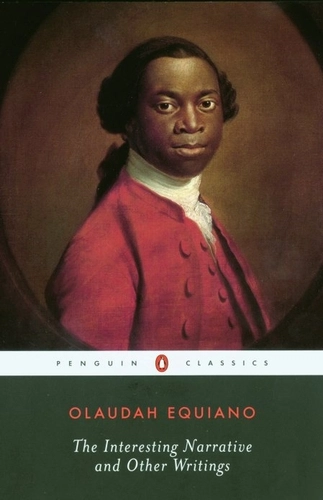
Equiano’s narrative begins with a description of his native land, Eboe, and its culture. He discusses his people’s belief in the one “creator” that is following them in charge of the main events of one’s life, and the narrator also explains that the Eboe society had two important values: cleanliness and decency. He then recounts how he and his sister were kidnapped and separated, and how he became a slave from one master to the other before being sent on a ship to Barbados where he is sold to work on a plantation. There, his master sells him to a man called Michael Henry Pascal who makes him work on a ship and renames him Gustavus Vassa. After a few years, Equiano and his master meet the Guerin for whom the slave work as a servant. During this period, Equiano meets Daniel Queen, a man who teaches him about western religion and manners. Eventually, Pascal sends him to Captain Doran before selling the Eboe native to Robert King, a quaker merchant. Working for King but travelling with Captain Thomas Farmer, Equiano is treated better and begins to save some money to buy his freedom in a near future. He finally manages to do so a few months later, in 1766. Back in England, Equiano works as a sailor and participates in many sea voyages to across the Atlantic and in 1788, he introduces a petition to the queen in which he seeks her support in fighting against slavery. He then concludes that he hopes that his book will interest readers, although he only narrates his life as truly as possible.
The pressure to adhere to capitalist values that Equiano experiences as a slave follows him once he is freed, suggesting its inevitability. Through his slavery, he learns the value of work as the only possible way to get his freedom. Trying to obtain it through revolt does not seem to be a viable option for Equiano as he exemplifies by recounting the story of a man called Emmanuel Sankey. Sankey “who endeavour[s] to escape from his miserable bondage” (106), hides himself on board of a ship bound to London. Unfortunately, the ship’s crew discovers him and his master “pin[s] [him] down to the ground at each wrist and ankle” (106). That Equiano mentions the details of this torture is important as it metaphorically mirrors the inability for slaves to leave the bottom of the social hierarchy; they are attached to the ground like Sankey. Consequently, Equiano views a commercial exchange as the only viable path to freedom and eventually purchases it for “forty pounds sterling” (135). Once a free man, Equiano never escapes the pressure to adhere to this capitalist work ethic. His survival even depends on it, suggesting how pressurised he is. After being manumitted, Equiano “work[s] with redoubled ardour” because his captain “promised [him] the privilege of carrying two bullocks (…) with [him]” (141). As John Mcleod’s discussion of Michel Foucault’s The History of Sexuality highlights, “power also works through gratification” (McLeod 45) and the examples discussed here highlight this dynamic. Although his status is different, there is still on him the pressure to work, enforced by the promise of earning a needed income whereas it was previously motivated by his desire for freedom. Even when freed then, he must obey capitalist rules.
Furthermore, Equiano’s adoption of Christianity, which he discovers during his enslavement by white masters, demonstrates the pressure put on freed slave to conform to white norms. Although he already has a “[r]eligion” in which other “natives believe” (40) in Eboe, Equiano abandons it and embraces Christianity during years as a slave. As a free man, nothing forces him to remain Christian, but the former slave does. The doctrine he adopts during his slavery follows him and is enforced by fear. As he repeatedly discloses, he becomes afraid of God’s punishment: “if I si[n] again, (…), I should certainly go to hell” (188). He feels that he cannot be “saved by what [he] ha[s] done” (188), but by God whose “invisible hand (…) guide[s] and protect[s] [him]” (190). Christianity has such a strong influence on Equiano that he even starts to actively spread it, motivated by his own fears: “I took all the pains that I could to instruct the Indian prince the doctrine of Christianity” (203). This suggests that, even when a free man, he feels compelled to adhere to white system of beliefs for his soul to be saved. Moreover, he is also under the pressure to use English instead of his native language even when he is free. For example, his proficiency in English is what enables him to help Stoker, a slave, to be brought back on the boat after that captain Jenning cruelly threw him overboard as a punishment: “[a] great deal of entreaty was used with the captain (…), before he would consent to let Stoker come on board” (216). As this suggests, he is forced to use the language of white English citizens to save others which, coupled with his Christian faith, reinforces his need to adhere to white norms as a manumitted slave.
Another norm Equiano must adhere to is the patriarchal one that dominates Europe at the time. His narrative, however progressive, leaves but limited space to hear about black women who were also slaves. However, as critical race theory scholar Kimberlé Crenshaw says, “[i]ntersectionality (…) create[s] challenges that are sometimes quite unique” (Crenshaw 00:11:10-00:11:35). Therefore, it is quite clear that enslaved women experience a real plight, but Equiano omits to mention it. For example, the lack of attention he gives to “the women” who “used to take care of [him]” (62) when they are sold strongly contrasts with his treatment of the previously mentioned Emmanuel Sankey. As Douglas Anderson notes, “their names” or origins are not mentioned by Equiano, nor is their suffering (Anderson 453). Interestingly, when Equiano discusses his native Eboe culture, he mentions that “many women as well as men (…) [are] armed with a broad sword” (39) to fight against enemy tribes. This example suggests that Eboe women have more agency than British women. Nevertheless, as critic Adam Potkay notes, it seems that even Equiano’s native land’s culture has patriarchal values as the former slave realises that: "the laws and rules of my own country [are] written almost exactly here [in The Bible] [92]” (Potkay 682). Since this comes from The Bible, which as the previous paragraph explains strongly influences him, Equiano is motivated to reproduce these behaviours even as a freed slave. Consequently, one can argue that Equiano’s reading of the bible comforts the patriarchal doctrine he had in in his home village, suggesting the religious pressure put on freed slave to assimilate to patriarchal norms.
Olaudah Equiano’s The Interesting Narrative highlights that one’s manumission does not bring total freedom. Indeed, his survival as a freed slave depends on his following of the capitalist work ethic taught to him during his enslavement. Moreover, he embraces Christianity fearful of divine punishment, suggesting the pressure to adhere to white religious norms. Additionally, his very sporadic discussion of women slaves betrays how he internalised a patriarchal system of values. Equiano’s story therefore highlights that freedom requires more than physical liberation.
WORKS CITED:
Anderson, Douglas. “Division below the surface: Olaudah Equiano’s ‘Interesting narrative.’” Studies in Romanticism, vol. 43, no. 3, 2004, pp. 439–460, https://doi.org/10.2307/25601689
Crenshaw, Kimberlé. “The urgency of intersectionality.” YouTube, uploaded by TED, 7 December 2016, https://www.youtube.com/watch?v=akOe5-UsQ2o&t=1013s&ab_channel=TED
Equiano, Olaudah. The Interesting Narrative and Other Writings. Edited by Vincent Carretta, Penguin Classics, 2003.
McLeod, John. Beginning postcolonialism (second edition). Manchester University Press, 2010, pp 44-79.
Potkay, Adam. “Olaudah Equiano and the Art of Spiritual Autobiography.” Eighteenth-Century Studies, vol. 27, no. 4, 1994, pp. 677–692, https://doi.org/10.2307/2739447
© Liam Magin. All Rights Reserved. This work is the intellectual property of the author. Do not copy or redistribute without permission.


Comments